


› ‹
  • 1
  • 2
  • 3
  • 4

Dave Basarab Consulting has elevated the training experience, offering an end-to-end comprehensive approach that includes training strategy, instructional design, development, delivery , post program training transfer, and evaluation (via the unique Predictive Evaluation methodology). Virtual Chief Architect Dave Basarab has combined all of these individual training elements with his user-friendly, comprehensive Learning to Performance approach, which significantly increases companies' training ROI.

Why we are different

  • Innovation: Our primary focus is creating learning programs using a Learning to Performance approach.
  • Expertise: Dave offers the depth and breadth of his experience, including working internally at prestigious companies (Motorola, Ingersoll Rand and Pitney Bowes) as well as his knowledge and expertise as a highly-respected, sought-after consultant.
  • Partnership: Basarab collaborates with companies, serving as their own Chief Learning Officer whenever they need to plan, strategize, or implement training initiatives.

Training Services

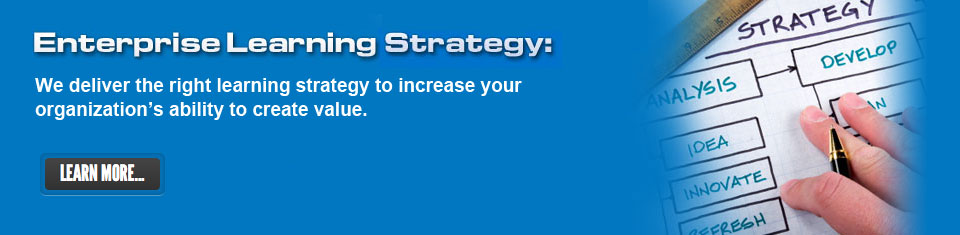
Enterprise Learning Strategy

Enterprise Learning Strategy

At Dave Basarab Consulting, we're experts in creating Enterprise Learning Plans. We work with you to develop your company's learning strategy and direction.

More...

Custom Design, Development, & Delivery

Custom Design, Development, & Delivery

Custom training is an effective way of developing the capability required to execute your strategy. We are a custom design house that creates programs specific to your business.

More...

Learning Burst Development

Learning Burst Development

We can create and deliver your courses via our unique Learning Burst Method - keeping your employees at their jobs while receiving world-class training.

More...

Predictive Evaluation

Predictive Evaluation

We predict the ROI for your courses and establish success gates. We then evaluate the course against the success gates to show value realized and continually improve results.

More...

Leadership Development

Leadership Development

Turn-key virtual custom leadership development program that combines world-class leadership speakers/educators with post-event personalized coaching to provide you with a cadre of highly skilled leaders.

More...

Predictive Evaluation

Building A Learning Ecosystem For Continuous Upskill And Reskill

Organisations need a reliable way to build capability as roles, technology and customer expectations change. A learning ecosystem connects people, content, managers, systems and business priorities so development becomes part of everyday work rather than an occasional course.

This approach supports both upskilling, which deepens capability in a current role, and reskilling, which prepares employees for substantially different responsibilities. It can include formal training, coaching, peer learning, job rotations, digital resources and practical experience.

For Australian employers, the model must reflect dispersed teams, skills shortages and varied workforce needs across Sydney, Melbourne, Brisbane, Perth and regional locations. It should also accommodate hybrid work, high compliance expectations and a workplace culture that values practical, immediately useful development.

Approach Primary Strength Common Limitation Best Use
Course-led training Consistent knowledge transfer Limited workplace application Compliance and foundational skills
Informal learning Flexible and social Harder to govern and measure Experience sharing and problem-solving
Learning ecosystem Connects development to work and strategy Requires coordination Ongoing capability transformation

Define The Capability Direction

An effective ecosystem begins with the capabilities the organisation will need over the next two to five years. Senior leaders, operational managers and subject matter experts can identify strategic priorities such as artificial intelligence, cyber security, customer experience, frontline leadership or advanced data analysis.

Capability priorities should be translated into observable behaviours. “Improve digital capability” is too broad to guide learning investment, while “use approved analytics tools to identify service delays” gives designers and managers a practical target.

Map Skills To Real Work

A skills map shows what people need at different stages of a role, from new starter to experienced practitioner. It can combine technical knowledge, human skills, regulatory requirements and role-specific performance standards.

The map should be tested against real workflows rather than developed as a static human resources document. In a mining operation in Western Australia, for example, reskilling may involve equipment technology and safety judgement; in a Melbourne professional services firm, it may focus on automation, client communication and ethical use of data.

Create Flexible Learning Pathways

Employees learn in different ways and have different amounts of available time. A blended pathway might combine a short digital module, a facilitated workshop, guided practice, manager feedback and a workplace project. Learning bursts can provide targeted support when a new system or process is introduced.

Useful pathway components include:

  • Role-based capability profiles linked to business priorities
  • Short digital resources available at the point of need
  • Practice activities based on genuine workplace scenarios
  • Coaching, mentoring and peer communities
  • Assessments that demonstrate applied competence

This structure makes development more accessible for shift workers, mobile teams and employees in regional Australia. It also gives learners a clear progression from awareness to confident performance.

Embed Learning Into Daily Operations

Continuous development works best when learning is built into the flow of work. Managers can use team huddles to review customer cases, project retrospectives to discuss lessons and one-to-one meetings to agree on specific development actions.

Technology should simplify access rather than create another destination employees must remember. A learning experience platform, collaboration channel or knowledge base can connect guidance with the systems people already use. Clear governance is important so that content remains current, searchable and aligned with workplace policies.

Equip Leaders To Reinforce Capability

Managers determine whether new skills are practised after a workshop. They need simple tools for setting expectations, observing behaviour, giving feedback and recognising progress. Leadership development should therefore include the ability to create learning-rich teams, not just individual leadership theory.

A strong leadership culture also protects learning during organisational change. Practical guidance on learning culture guidance can help organisations maintain development habits when executives, priorities or structures shift.

Measure Adoption And Business Impact

Participation figures provide useful operational information, but they do not prove that capability has improved. Evaluation should examine whether employees adopted the new behaviour, whether performance changed and whether the change contributed to a meaningful business result.

Predictive Evaluation offers a disciplined way to forecast likely adoption, impact and return on investment before substantial resources are committed. The Dave Basarab Consulting approach can help connect learning measures with indicators such as productivity, safety, quality, retention, customer satisfaction or revenue.

A practical measurement framework may include:

  • Learner confidence and demonstrated competence
  • Manager observation of changed workplace behaviour
  • Operational indicators linked to the learning goal
  • Adoption rates across teams, sites or regions
  • Financial or strategic value generated over time

Start With A Focused Capability Pilot

An organisation does not need to redesign every learning program at once. A focused pilot can test the ecosystem model around one strategic capability, such as frontline supervision, digital adoption or technical reskilling.

Choose a business area with a visible performance need, establish a baseline, involve managers from the beginning and provide a pathway that combines learning with application. The concrete next step is to select one capability priority and document its current performance measure, target behaviour and first 90-day learning pathway.

Learning to Performance

Learning to Performance, a complete training approach, gives companies world-class training to drive significant return. This approach includes upfront work (Impact Mapping, design), training (for staff and company executives), and post-training efforts to ensure training transfer. This unique recipe - the key for successful training and adoption - is changing the way companies implement training. This methodology could work with any content for organizations in any industry.

More...