


› ‹
  • 1
  • 2
  • 3
  • 4

Dave Basarab Consulting has elevated the training experience, offering an end-to-end comprehensive approach that includes training strategy, instructional design, development, delivery , post program training transfer, and evaluation (via the unique Predictive Evaluation methodology). Virtual Chief Architect Dave Basarab has combined all of these individual training elements with his user-friendly, comprehensive Learning to Performance approach, which significantly increases companies' training ROI.

Why we are different

  • Innovation: Our primary focus is creating learning programs using a Learning to Performance approach.
  • Expertise: Dave offers the depth and breadth of his experience, including working internally at prestigious companies (Motorola, Ingersoll Rand and Pitney Bowes) as well as his knowledge and expertise as a highly-respected, sought-after consultant.
  • Partnership: Basarab collaborates with companies, serving as their own Chief Learning Officer whenever they need to plan, strategize, or implement training initiatives.

Training Services

Enterprise Learning Strategy

Enterprise Learning Strategy

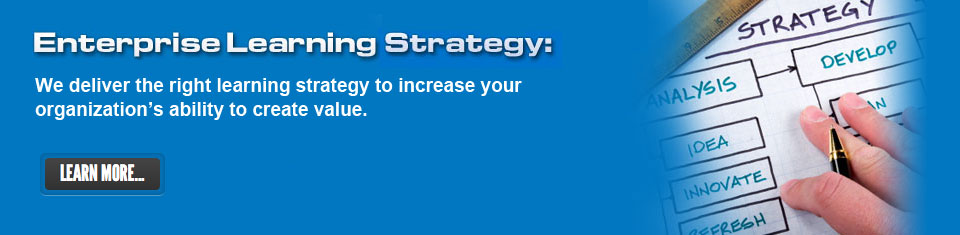
At Dave Basarab Consulting, we're experts in creating Enterprise Learning Plans. We work with you to develop your company's learning strategy and direction.

More...

Custom Design, Development, & Delivery

Custom Design, Development, & Delivery

Custom training is an effective way of developing the capability required to execute your strategy. We are a custom design house that creates programs specific to your business.

More...

Learning Burst Development

Learning Burst Development

We can create and deliver your courses via our unique Learning Burst Method - keeping your employees at their jobs while receiving world-class training.

More...

Predictive Evaluation

Predictive Evaluation

We predict the ROI for your courses and establish success gates. We then evaluate the course against the success gates to show value realized and continually improve results.

More...

Leadership Development

Leadership Development

Turn-key virtual custom leadership development program that combines world-class leadership speakers/educators with post-event personalized coaching to provide you with a cadre of highly skilled leaders.

More...

Predictive Evaluation

Creating a Learning Culture Dashboard for Senior Leadership Visibility

Senior leaders need a clear view of whether learning is changing capability, behaviour and business performance. A learning culture dashboard turns scattered data from learning management systems, surveys, manager conversations and operational reports into a concise view of organisational health.

The strongest dashboards do more than display course completions. They show whether employees can access relevant development, whether managers reinforce learning, and whether capability is improving in areas that matter to the organisation. This creates a practical bridge between enterprise learning strategy and executive decision-making.

Why Leadership Visibility Matters

Learning teams often report activity because activity is easy to count. Enrolments, attendance and assessment results have value, yet they do not explain whether employees are applying new skills or whether the investment is supporting strategic priorities.

Senior leaders need evidence that connects learning with workforce capability, productivity, safety, customer experience and retention. In Australia, this may include tracking capability across Sydney and Melbourne offices, regional sites, remote teams or fly-in fly-out workforces in mining and energy.

A dashboard gives executives a shared language for discussing progress. It can highlight where adoption is strong, where managers are not reinforcing development, and where a capability gap threatens delivery of a major business plan.

Define Signals That Matter

Start by identifying the decisions the dashboard should support. A chief executive may need a view of strategic capability risk, while a people leader may need to understand manager participation, internal mobility or workforce readiness. Each measure should help someone decide where to invest, intervene or adjust.

Useful indicators include learning access, completion quality, skill confidence, manager reinforcement, workplace application and business outcomes. Segmenting these measures by role, location, tenure, business unit and employment type can expose patterns that an organisation-wide average hides.

Australian employers may also need to consider apprenticeship pathways, compliance requirements, dispersed regional operations and the expectations of a workforce shaped by flexible and hybrid work. The dashboard should reflect these operating realities rather than copy a generic model from an overseas organisation.

Build A Practical Dashboard Architecture

A reliable dashboard usually has three layers. The first shows participation and reach, such as active learners, completion rates and access by workforce segment. The second shows adoption, including observed behaviour change, manager follow-up and use of tools or processes introduced through learning. The third shows impact, such as reduced errors, faster onboarding or improved customer outcomes.

Keep the executive view concise, with drill-down capability for learning and people teams. Use clear thresholds, trend lines and short explanations of what has changed. Avoid presenting ten measures that all describe the same activity; a smaller set of well-defined indicators is more useful.

A learning consultancy can help align the dashboard with the organisation’s learning strategy, measurement maturity and reporting systems. This is especially useful when data sits across an LMS, HR platform, workforce scheduling tools and operational systems.

Compare Reporting Choices

The right reporting approach depends on the maturity of the organisation, the quality of available data and the audience using the information. A dashboard should make progress easier to interpret, not create another administrative burden for learning teams.

Reporting approach Best used for Strength Common limitation
Activity scorecard Early measurement maturity Quick visibility of reach and participation Says little about workplace application
Capability dashboard Strategic workforce programs Links learning to skills and role readiness Requires consistent capability definitions
Adoption dashboard Behaviour and process change Shows whether learning is being used Needs manager and operational data
Predictive evaluation view Major investment decisions Forecasts likely impact and return Requires clear assumptions and baseline data

A staged approach can work well. Begin with trustworthy participation and quality measures, then add application and impact indicators as data collection becomes more consistent. For high-value programs, Predictive Evaluation can help forecast training adoption, impact and return on investment before the full program is rolled out.

Connect Learning To Business Outcomes

Every strategic learning program should have an outcome chain: the capability employees need, the behaviour that demonstrates it, and the business result expected from that behaviour. For example, a frontline leadership program might connect coaching practice with reduced rework, stronger engagement and improved retention.

The dashboard should display both leading and lagging indicators. Leading indicators include manager participation, practice frequency and confidence in applying a skill. Lagging indicators may include safety incidents, sales conversion, project delivery or customer satisfaction. Viewing both helps leaders act before a delayed business measure confirms a problem.

Employee evidence adds important context. Feedback can reveal whether a module is relevant to actual work, whether examples reflect Australian operating conditions, and where participants need further support. Guidance on feedback loops can help learning teams use that evidence to refine custom training.

Make Adoption Visible

Adoption is the point at which learning becomes part of normal work. A dashboard can show whether employees use job aids, apply a new conversation framework, follow a revised process or seek coaching after formal training. These signals are often more valuable than a completion certificate.

Managers play a central role in sustaining adoption. Include measures such as follow-up conversations, observation of applied skills and team participation in learning bursts. A simple manager pulse survey, combined with system and operational data, can provide a useful picture without creating excessive reporting effort.

For organisations operating across Brisbane, Perth, Canberra and regional locations, compare adoption by context rather than treating variation as failure. Different rosters, customer demands and local labour conditions may require different reinforcement methods while still supporting the same capability standard.

Establish A Review Rhythm

Senior leadership visibility depends on regular interpretation, not just dashboard publication. A monthly operational review can focus on adoption barriers, while a quarterly executive review can examine capability risk, investment choices and business impact.

Assign ownership for each metric and document its definition, source, frequency and decision threshold. Protect employee privacy by using appropriate aggregation, especially in small teams or sensitive workforce segments. Clear governance increases trust in the data and prevents debates about definitions from replacing useful action.

Begin the next review cycle by selecting three strategic capabilities, agreeing on one adoption measure and one business outcome for each, and publishing the first baseline dashboard.

Learning to Performance

Learning to Performance, a complete training approach, gives companies world-class training to drive significant return. This approach includes upfront work (Impact Mapping, design), training (for staff and company executives), and post-training efforts to ensure training transfer. This unique recipe - the key for successful training and adoption - is changing the way companies implement training. This methodology could work with any content for organizations in any industry.

More...