


› ‹
  • 1
  • 2
  • 3
  • 4

Dave Basarab Consulting has elevated the training experience, offering an end-to-end comprehensive approach that includes training strategy, instructional design, development, delivery , post program training transfer, and evaluation (via the unique Predictive Evaluation methodology). Virtual Chief Architect Dave Basarab has combined all of these individual training elements with his user-friendly, comprehensive Learning to Performance approach, which significantly increases companies' training ROI.

Why we are different

  • Innovation: Our primary focus is creating learning programs using a Learning to Performance approach.
  • Expertise: Dave offers the depth and breadth of his experience, including working internally at prestigious companies (Motorola, Ingersoll Rand and Pitney Bowes) as well as his knowledge and expertise as a highly-respected, sought-after consultant.
  • Partnership: Basarab collaborates with companies, serving as their own Chief Learning Officer whenever they need to plan, strategize, or implement training initiatives.

Training Services

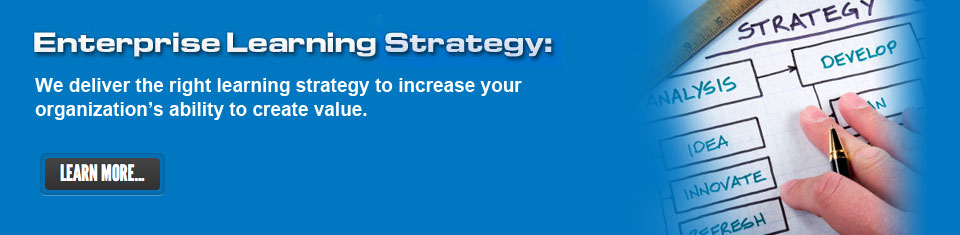
Enterprise Learning Strategy

Enterprise Learning Strategy

At Dave Basarab Consulting, we're experts in creating Enterprise Learning Plans. We work with you to develop your company's learning strategy and direction.

More...

Custom Design, Development, & Delivery

Custom Design, Development, & Delivery

Custom training is an effective way of developing the capability required to execute your strategy. We are a custom design house that creates programs specific to your business.

More...

Learning Burst Development

Learning Burst Development

We can create and deliver your courses via our unique Learning Burst Method - keeping your employees at their jobs while receiving world-class training.

More...

Predictive Evaluation

Predictive Evaluation

We predict the ROI for your courses and establish success gates. We then evaluate the course against the success gates to show value realized and continually improve results.

More...

Leadership Development

Leadership Development

Turn-key virtual custom leadership development program that combines world-class leadership speakers/educators with post-event personalized coaching to provide you with a cadre of highly skilled leaders.

More...

Predictive Evaluation

Designing E-Learning for Mobile Learners in the Field

Field capability is often won in vehicle parks, plant rooms and work sites. Designing an E-Learning Module That Supports Mobile Learners in the Field starts with one premise: the lesson must work where work happens, on a phone, in short bursts and sometimes without signal. A desktop course squeezed onto a small screen is not mobile learning.

Australian field teams operate beyond reliable cellular footprints. A technician may lose coverage outside Wagga Wagga, a farm worker in the Riverina may begin before sunrise, and a driver may finish routes around Geelong with little downtime. Heat, dust, vehicle noise and mandatory PPE complicate phone use. A colloquial prompt such as “have a squiz before you start” can suit a crew when it reflects how its people actually speak.

Shape each lesson as a learning burst around a field task and clear performance outcome. Keep screens focused, allow interruption and use realistic decisions instead of long explanations. The module should help someone act correctly on the next job, not merely remember a course menu.

Australian enterprises often manage learning through established learning management systems, formal procurement and layered manager expectations. Technology supports change, but adoption depends on relevance, access and reinforcement. Measurement should begin with the storyboard, covering usage, behaviour and operational results.

Start with the work

Observe the task before designing the screen. What equipment, customer or risk is present? Where do errors occur? Watch a technician, driver or operator complete the job, then identify the decisions and evidence that distinguish safe, effective work.

Write one observable outcome, such as “select the correct isolation check before maintenance”. Remove content that does not support it. A focused module is easier to retrieve later, easier for managers to reinforce and easier to improve from field evidence.

Build for imperfect conditions

Use compressed audio, captions and transcripts, clear icons and alt text. Keep files small, avoid autoplay, save progress and provide an offline path for mandatory content. Use generous touch targets, strong contrast and readable type. Where gloves prevent touch input, offer a printable equivalent or manager-supported catch-up.

If the module forms part of a wider capability shift, enterprise learning support can align design, manager habits and evaluation rather than treating the course as a separate artefact. A resilient design works on an older phone and an ordinary connection; the newest demo device is not the benchmark.

Match the format to the task

Choose media by field need, novelty and available time. A quick rule may suit recall; a branching scenario may suit judgement; a job aid may matter more during the task itself. Interactive video earns its data cost only when choices or feedback drive learning.

Field need Best-fit format Design decision
Recall a critical rule Microlearning card Keep it under one minute and pair it with a job prompt
Diagnose a fault Branching scenario Reveal evidence gradually and explain each choice
Practise a conversation Role-play simulation Give immediate, specific feedback and allow replay
Act during work Mobile job aid Surface the next step instantly and support offline access

Formats can be combined within one journey, but each element needs a purpose. Test the combination on realistic devices. If learners must download large video before beginning, make a lighter route available; if the job continues without formal learning, connect the guidance to an actual task.

Make each interaction earn its place

Use one primary action per screen, generous buttons and visible progress. Avoid tiny text, hover-dependent controls and timed quizzes. Design for quick starts, pauses and returns, since a five-minute module may become three fragments across a shift.

Build realism with field advisers, not assumptions about location. Where content affects Aboriginal or Torres Strait Islander communities, work with local representatives and follow cultural protocols. Local detail should improve accuracy and respect, while avoiding stereotypes or treating one crew’s language as universal.

Bring managers into the flow

Managers determine whether learning survives the lesson. Give them a short discussion prompt, one observable behaviour and a way to check application during normal work. The manager buy-in guide offers a useful pattern: involve leaders before launch so they can remove barriers and reinforce the new routine.

Keep reinforcement light. A two-minute team huddle, a scenario question or a review of a real near miss can prompt action without turning learning into paperwork. Ask about usability and confidence alongside completion, and respond when the design creates friction.

Measure what changes in the work

Track more than opens and completions. Useful leading indicators include repeat visits, use of the job aid, first-attempt performance, time to find critical information and manager-supported practice. Segment results by role, device and region, while protecting learner privacy and avoiding rankings that encourage gaming.

Predictive Evaluation can forecast adoption and test whether usage is likely to change behaviour or improve operations. Establish a baseline, define the chain from activity to application, and revisit the forecast as evidence arrives. This approach connects learning investment to productivity, quality, risk reduction and return on investment instead of treating completion as impact.

The standard to remember

Before release, check the module against these standards:

  • Tie the lesson to one observable field task.
  • Keep the core journey usable on a low-bandwidth connection.
  • Provide captions, transcripts, alt text and readable controls.
  • Support gloves, interruptions, resumes and offline access.
  • Test with field workers, managers and representative devices.
  • Define adoption, application and business measures before launch.

The standard is not polish at any cost. It is a lesson a field worker can find in seconds, complete in a few minutes, resume after an interruption and apply on the next job. The promise to remember is simple: useful in the hand, timely in the flow and measurable in the work.

Learning to Performance

Learning to Performance, a complete training approach, gives companies world-class training to drive significant return. This approach includes upfront work (Impact Mapping, design), training (for staff and company executives), and post-training efforts to ensure training transfer. This unique recipe - the key for successful training and adoption - is changing the way companies implement training. This methodology could work with any content for organizations in any industry.

More...