


• 1
  • 2
  • 3
  • 4

Dave Basarab Consulting has elevated the training experience, offering an end-to-end comprehensive approach that includes training strategy, instructional design, development, delivery , post program training transfer, and evaluation (via the unique Predictive Evaluation methodology). Virtual Chief Architect Dave Basarab has combined all of these individual training elements with his user-friendly, comprehensive Learning to Performance approach, which significantly increases companies' training ROI.

Why we are different

  • Innovation: Our primary focus is creating learning programs using a Learning to Performance approach.
  • Expertise: Dave offers the depth and breadth of his experience, including working internally at prestigious companies (Motorola, Ingersoll Rand and Pitney Bowes) as well as his knowledge and expertise as a highly-respected, sought-after consultant.
  • Partnership: Basarab collaborates with companies, serving as their own Chief Learning Officer whenever they need to plan, strategize, or implement training initiatives.

Training Services

Enterprise Learning Strategy

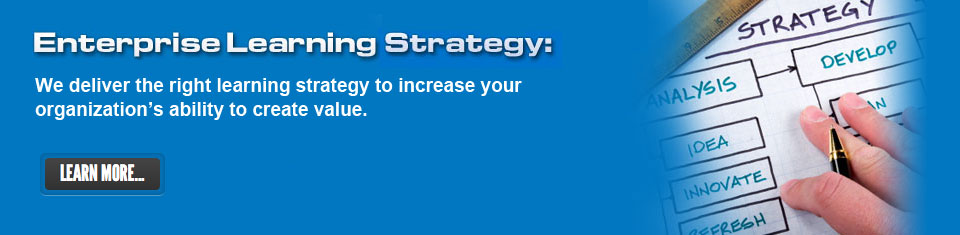
Enterprise Learning Strategy

At Dave Basarab Consulting, we're experts in creating Enterprise Learning Plans. We work with you to develop your company's learning strategy and direction.

More...

Custom Design, Development, & Delivery

Custom Design, Development, & Delivery

Custom training is an effective way of developing the capability required to execute your strategy. We are a custom design house that creates programs specific to your business.

More...

Learning Burst Development

Learning Burst Development

We can create and deliver your courses via our unique Learning Burst Method - keeping your employees at their jobs while receiving world-class training.

More...

Predictive Evaluation

Predictive Evaluation

We predict the ROI for your courses and establish success gates. We then evaluate the course against the success gates to show value realized and continually improve results.

More...

Leadership Development

Leadership Development

Turn-key virtual custom leadership development program that combines world-class leadership speakers/educators with post-event personalized coaching to provide you with a cadre of highly skilled leaders.

More...

Predictive Evaluation

How to Integrate Learning Bursts into Your Existing LMS

Learning bursts are short, focused learning experiences designed to help employees apply one idea, skill, or behavior at the moment it matters. They may include a five-minute video, scenario, reflection prompt, job aid, quiz, or manager-led practice activity.

Adding these experiences to an established learning management system can improve access and reinforce formal training. However, success depends on more than uploading short videos. The LMS must support a clear learning journey, useful data, timely reminders, and a connection between each burst and a business need.

A practical integration model treats learning bursts as part of the organization’s broader learning ecosystem. They should complement courses, coaching, performance support, and leadership development rather than operate as disconnected content.

Define the Role of Learning Bursts

Begin by identifying where short-form learning can strengthen the current employee experience. Learning bursts work well between classroom sessions, after onboarding, during a software rollout, or as reinforcement for a leadership program. They can also address recurring performance gaps that do not justify a full course.

Each burst should have one primary objective. For example, a module might help supervisors give specific feedback, prepare employees for a difficult conversation, or practice a new safety behavior. A narrow objective makes content easier to complete, measure, and improve.

Review existing courses and learning pathways before creating anything new. Look for points where employees forget key concepts, hesitate to apply a skill, or need a prompt before performing a task. These moments provide stronger opportunities than simply converting long courses into smaller pieces.

Prepare the LMS Structure

Your LMS should make short learning easy to find, complete, and revisit. Create a dedicated catalog category, learning path, or collection for bursts, while preserving links to the larger programs they support. Consistent naming conventions help employees recognize the purpose and sequence of each activity.

Use concise metadata, including skill area, estimated time, audience, related course, and application context. Search filters and tags can make a growing library more useful. If the platform supports playlists or automated pathways, organize bursts into stages such as prepare, practice, apply, and reinforce.

Check the learner experience on mobile devices and across common browsers. A burst that requires excessive scrolling, multiple logins, or unsupported media will lose much of its value. Test completion tracking, accessibility features, captions, notifications, and reporting before launch.

Design for Action and Reinforcement

A strong learning burst usually follows a simple pattern: introduce a practical idea, show what it looks like, invite the learner to make a decision, and provide a way to apply the skill. The experience may end with a commitment, checklist, manager conversation, or workplace assignment.

Keep media purposeful. A short video should demonstrate a behavior or clarify a complex point rather than reproduce a lecture. Scenarios, branching questions, downloadable tools, and reflection prompts often create more transfer than passive viewing.

For topics involving communication or leadership, use realistic workplace tension. A burst on conflict management, for example, can help employees identify interests, reframe a disagreement, and plan a collaborative conversation. Resources such as conflict-to-collaboration expertise can inform the examples and behaviors used in that experience.

LMS Element Integration Approach Evidence to Monitor
Catalog Add consistent tags, titles, and skill categories Search activity and enrollment
Learning paths Place bursts before, between, or after formal courses Pathway progression
Notifications Trigger reminders based on timing or incomplete actions Open and completion rates
Assessments Use brief scenario checks and confidence ratings Knowledge and confidence change
Reporting Connect burst data with performance indicators Adoption, application, and business impact

Connect Bursts to Business Outcomes

Completion data is useful, but it does not explain whether employees adopted the intended behavior. Establish a measurement plan before launch. Define what learners should do differently, who will observe the change, and which operational result may be affected.

Predictive Evaluation can support this process by forecasting likely adoption and impact before significant resources are invested. For each burst, identify leading indicators such as manager observation, tool usage, quality scores, customer feedback, or reduced process errors. These measures create a bridge between LMS activity and business performance.

Use the LMS for immediate signals and other business systems for outcome data. A burst designed to improve sales discovery, for example, might be linked to call-quality reviews, opportunity progression, and conversion rates. This broader view helps learning teams refine content based on evidence rather than completion volume alone.

Build Adoption Into the Experience

Employees are more likely to use learning bursts when the content appears at a relevant time and supports a current priority. Coordinate launch messages with managers, project leaders, and internal communications. Explain why the burst matters, how long it takes, and what action follows completion.

Manager involvement can increase transfer. Provide supervisors with a short discussion guide, observation checklist, or team activity connected to the burst. A manager who reinforces the behavior in a team meeting turns an isolated digital interaction into an ongoing practice.

The case for microlearning also highlights the importance of fitting learning into the flow of work. That principle should shape delivery schedules, reminders, and application tasks rather than simply determine content length.

Establish a Sustainable Operating Model

Learning bursts require ownership after launch. Assign responsibility for content review, technical quality, analytics, accessibility, and retirement. Short modules can become outdated quickly when policies, systems, or customer expectations change.

Use a repeatable production template to maintain quality across departments. Include the objective, target audience, estimated time, activity type, application task, manager reinforcement, and measurement approach. A common template speeds development while leaving room for relevant examples.

Prioritize the first release carefully rather than filling the LMS with a large library. A small set of well-timed bursts, supported by strong communication and measurement, can reveal what employees use and where the platform experience needs adjustment.

Launch With Clear Priorities

Before publishing the first learning path, confirm that each burst has a defined purpose, an appropriate audience, and a practical follow-through activity.

  • Map each burst to a current performance or capability priority.
  • Test the learner journey on mobile and desktop devices.
  • Add manager reinforcement and workplace application steps.
  • Track adoption indicators alongside operational outcomes.
  • Schedule regular reviews for content accuracy and relevance.

When learning bursts are integrated with thoughtful pathways, useful prompts, and credible evaluation, the LMS becomes more than a content repository. It becomes a channel for timely capability development and measurable behavior change. Start with one high-value performance need, build a focused burst, and use the evidence from its rollout to expand the model across your organization.

Learning to Performance

Learning to Performance, a complete training approach, gives companies world-class training to drive significant return. This approach includes upfront work (Impact Mapping, design), training (for staff and company executives), and post-training efforts to ensure training transfer. This unique recipe - the key for successful training and adoption - is changing the way companies implement training. This methodology could work with any content for organizations in any industry.

More...