Design and Development
The third step in the Learning to Performance System is to begin instructional design and course development . The output of the second step, the Impact Map , is considered for this activity. The purpose of this task is to take the first column of the map and seamlessly turn it into training .
I use the ADDIE model for my design and development efforts . The ADDIE Model is a generic term for the five-phase instructional design model consisting of Analysis, Design, Development, Implementation, and Evaluation. Each step has an outcome that feeds into the next step in the sequence.
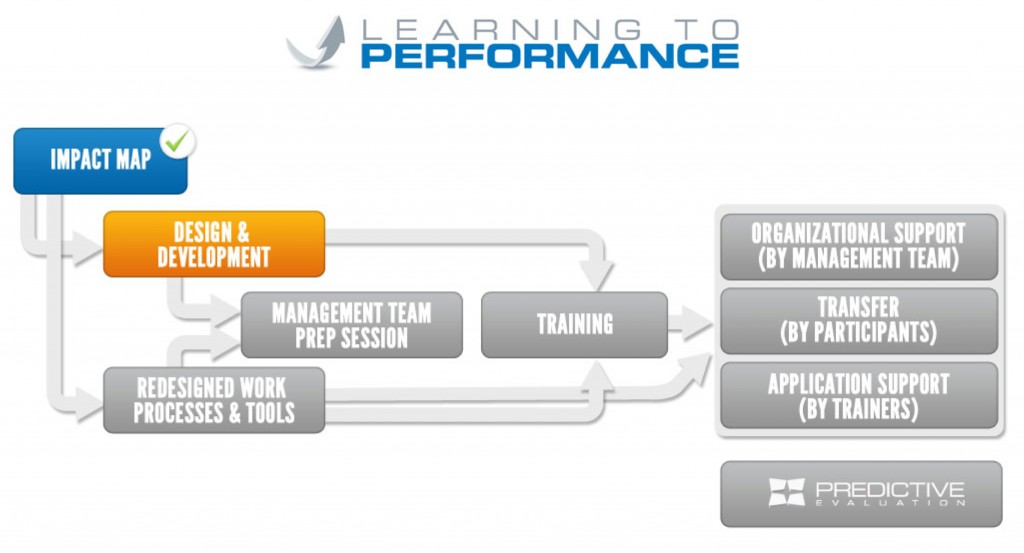
I use the 5 phases of ADDIE in the Learning to Performance System in key (sequential) ways:
- Analysis – during analysis, I review the Impact Map for this course that clearly identifies the business goals, organizational results , on-the-job behaviors , key information that learners must know, learner skills, and beliefs. I then examine the learning environment, any constraints, delivery options, budget, and the project timeline. I conduct detailed interviews with subject matter experts to clearly understand the tasks and activities that learners must master in training .
- Design – using the Impact Map and my environmental analysis, I specify learning objectives. Next, I determine which method of delivery fits best – I usually choose a blended approach of alternative and traditional classroom methods but it depends on what’s uncovered in the analysis phase. I create a detailed storyboards/window pane including when and how application exercises will be included in training. I often prototype the look and feel, graphic design, and user-interface (for alternate learning) at this time. I use the Steering Committee that created the Impact Map as the approval board for the design .
- Development – here I do the actual creation (production) of the content and learning materials based on the Design phase .
- Implementation – my interpretation of ADDIE Implementation involves a full-featured set of events to ensure mastery by learners, support from their supervisors & organization, and maximum training transfer . These are fully planned steps with the Learning to Performance System and I will cover them fully in upcoming blogs.
- Evaluation – I use my Predictive Evaluation (PE) model instead of the more “ traditional” evaluation approaches. The PE model is fully detailed in past blogs and on my website , and in upcoming blogs I will discuss how it is seamlessly integrated into the Learning to Performance System.
As always I welcome your comments on my approach.