



Predicting Training’s Value
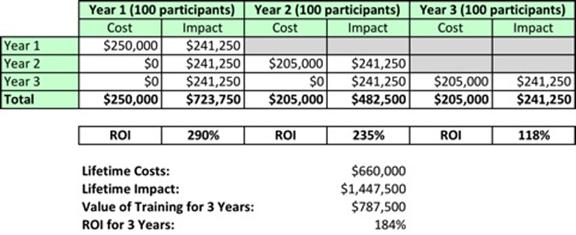
When we predict training’s value , we use a form of business forecasting—estimating what training will deliver in terms of increased organizational and business results. These predictions come in the form of participant Intentions , Adoption in the workplace, resulting Impact on the business, and the costs to deliver the value. These predictions enable decision makers to make highly informed, proactive decisions .
As with any business forecasting method, predicting training’s value has benefits and drawbacks that need to be weighed before proceeding.
The benefits of predicting training’s value include:
- It aids in decision making (whether a business should move forward with training).
- It provides input, allowing for smarter, more strategic decisions about planning and resource allocation (people and budgets).
- If data is high quality, it can create an accurate picture of the future.
Its drawbacks are:
- Data is not always reliable or accurate.
- Data may be outdated.
- Qualitative data may be influenced by peer pressure.
- External factors may be out of the business’s control (e.g., economic policy, competition, and political developments).
The Impact Matrix - the Output of Predicting Training's Value
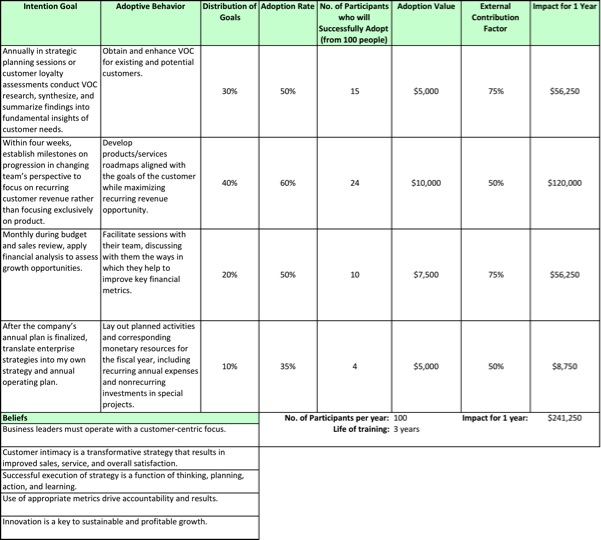
The Impact Matrix is a rectangular array of Intention goals & beliefs, Adoptive behavior examples, business results, and external contribution factors that, when combined using certain rules, predict the Impact from training. It’s usually created by a Steering Committee of subject matter experts and key decision makers, drawing a direct link from training to business impact.
Sample Impact Matrix for a Business Acumen Training Course
Click To Englarge
ROI of Training

Predictive Evaluation
Success Stories
Dave Basarab has created a unique approach to measure training ROI and found a powerful way to calculate how training investments can be linked to business results. This book is a must read for any learning leader that wants to have a seat at the executive table.
Bjorn Billhardt, CEO
Enspire Learning, Inc.